


The World Scout Committee (WSC) met in London, United Kingdom, from 24 to 28 September for its fifth business meeting of the triennium, this time generously hosted by The Scouts UK at their headquarters in Gilwell Park. The meeting was preceded by two online briefings to enable the WSC to cover a wide-ranging agenda.
The meeting began with a review of the WSC Team Charter and a report from the Secretary General covering the period from March to September 2026, which provided updates and highlights on the following topics:
An in-depth review of World Triennial Plan progress, as highlighted in the recently published WSC’s Midterm Report, with most key performance indicators on track or complete. Areas requiring further attention include peace education, environmental sustainability, safeguarding, and young people’s participation in decision-making and expanding impact measurement through further NSO uptake.
Safeguarding as a top priority for World Scouting with 78% of National Scout Organizations (NSOs) and National Scout Associations (NSAs) having submitted their Safe from Harm Assessments to date, 22% of which are fully compliant and 26% of which are partially compliant. Alongside a 2.5x increase in Safe from Harm Services requested this triennium, a newly created Safe from Harm platform will make it easier for NSOs and NSAs to complete and manage their Safe from Harm Self-Assessments.
Advancing the review of the four key World Scouting policies, and sharing thought leadership on education, youth leadership, peace, sustainability, and volunteering through opinion articles and new publications on school-based Scouting, innovative education, and future-ready competencies.
Updates on Scout Events, including national Jamborees around the world, a successful 2nd Africa Scout Moot held in South Africa, and signed Host Organisation Agreements with the Scouts of China (17th World Scout Moot) and Denmark (27th World Scout Jamboree).
Fundraising and resource mobilisation efforts together with the World Scout Foundation, which led to the approval and disbursement of year two projects of the Messengers of Peace Fund, along with funding and pro bono commitments from Victorinox, Accenture, Timu Rafika Foundation, and the European Commission, as well as continuation of funding for the Global Youth Mobilization through the EU’s Youth Empowerment Fund.
As a consequence, World Scouting grants grew to USD 3.7 million in 2026, benefiting 61 NSOs worldwide and supporting 153 national, regional, and global community impact projects across areas such as youth leadership, peace-building, and sustainability. A second open call for the Messengers of Peace Fund for NSOs closed earlier in September, with 99 NSO project applications received and currently being reviewed.
Response to humanitarian crises and climate-related disasters in Chile, Colombia, Lebanon, Nepal, Portugal, Venezuela, Palestine and the Democratic Republic of the Congo. Support has included emergency response initiatives and crowdfunding through the Scout Donation Platform.
Strengthening our influence and advocacy efforts by selecting 37 young people to represent World Scouting at global and regional forums, publishing the organisation’s first position paper on Youth, Peace and Security, and reopening nominations for the Messengers of Peace Awards to recognise outstanding youth leadership and community service.
External engagements included Youth Representatives at the United Nations General Assembly and the High-level Political Forum on Sustainable Development, as well as the WAGGGS World Conference in Cambodia, the YMCA World Council in Canada, and a CEO meeting of Big Six Youth Organisations in Switzerland. We also announced new partnerships with Accenture and the Learning Planet Institute to invest in youth education and sustainability.
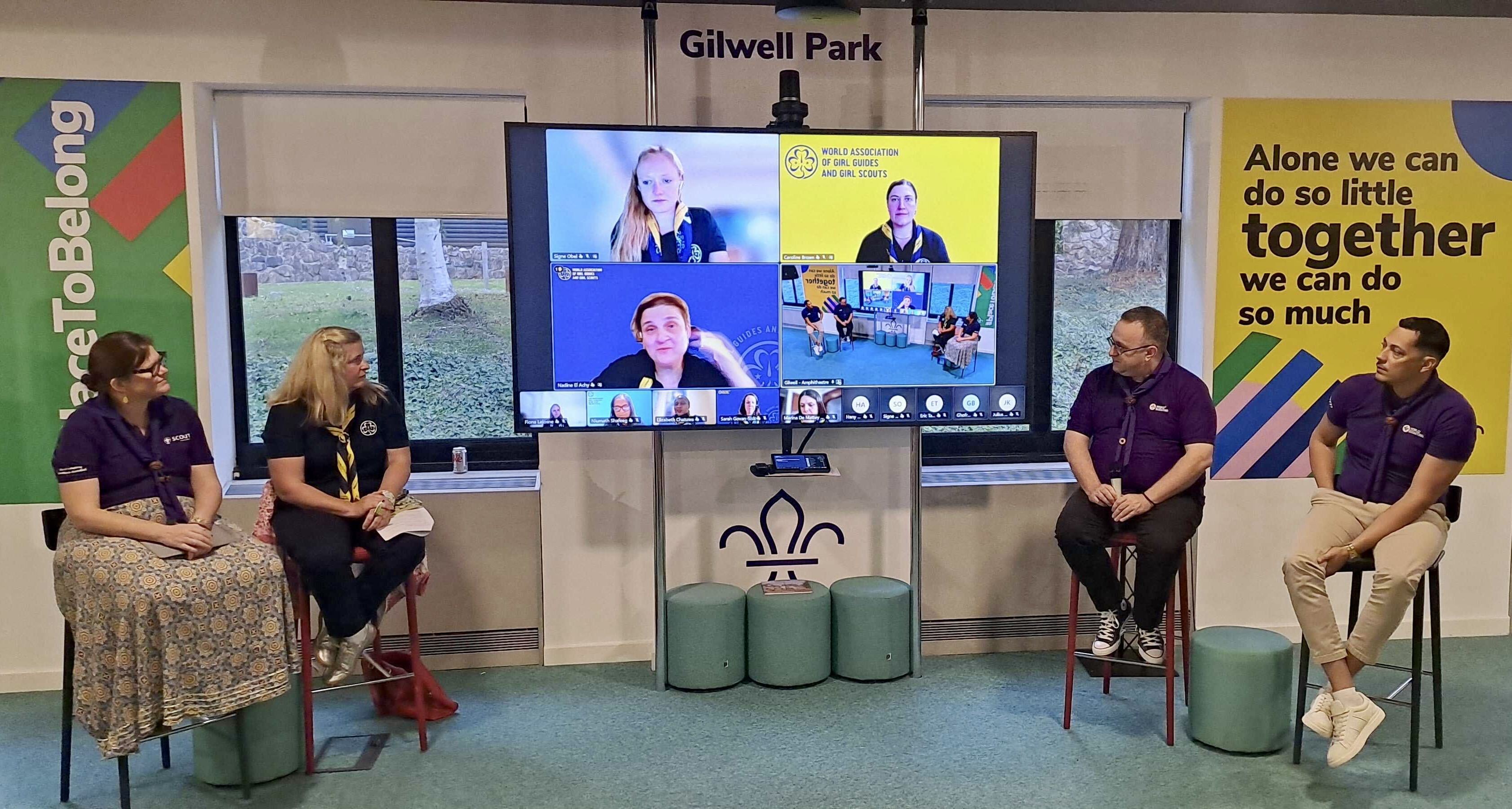
During the meeting, the WSC met with members of the WAGGGS World Board and Senior Management at Gilwell in person and online to discuss the opportunities and challenges facing both organisations. The discussion reaffirmed a shared commitment to strengthen trust and collaboration between the two governance bodies and their senior leadership teams.
The WSC also engaged in a panel discussion with Regional Chairpersons on priorities and challenges in each of our Regions. Further updates were shared on the Regional Triennial Plans in Africa, Arab, Asia-Pacific, Interamerica, and Europe, with all these plans now kickstarted and well underway.
The WSC also received the biannual report from the World Scout Foundation, and engaged in a dedicated session with its leadership to explore greater alignment in branding, communications and staff operations.
The WSC further reviewed progress across a range of other key strategic areas, including:
A progress review of the draft Safe from Harm enforcement mechanism, requested by the 2024 World Scout Conference. Final feedback will be collected over the next months from NSOs, Regional Committees, and participants at the 5th World Scout Education Congress, enabling further fine-tuning. The WSC anticipates reviewing and considering approval of the enforcement mechanism in the first quarter of 2027.
The delivery of 127 WOSM Services to 84 NSOs in the past six months, and an update on services and support being provided for both very large and very small NSOs, including targeted regional support initiatives in the Caribbean, Central Asia, Eastern Europe and the Caucasus.
Reviewed the licensing of the World Scouting brand and endorsed the next steps for partnering and establishing a new World Scout Shop. More details will be shared with NSOs when ready.
A discussion on the risk appetite of the WSC and review of major risks in the main risk registry and geo-political event risk tracker, including the impact of extreme weather and climate change on NSO operations and on Scouting events, compliance with safeguarding requirements for WOSM membership, as well as a competitive external funding landscape affecting the financial sustainability of NSOs.
A report from the Ethics and Safeguarding Task Force examined key governance issues related to World Scouting’s own ethics and safeguarding frameworks. Committee members also took part in a facilitated discussion led by the Board Diversity Task Force co-leads on opportunities to strengthen the future composition of the WSC through greater diversity, balanced geographic representation, and a broader range of skills and experience. A series of recommendations from both task forces was approved and will be further developed in the next period.
In light of a very busy upcoming World Events year, the WSC also took time to review the readiness of several upcoming events, as well as the implementation of the WOSM Events Strategy:
Reviewed preparations with the Hosts of the 44th World Scout Conference (United Kingdom), 26th World Scout Jamboree (Poland), and 17th World Scout Moot (Scouts of China), including key risks and mitigation measures. For the Conference, this included an initial review of the programme, budget framework, and online participant experience.
Received updates on other upcoming World Scout events, including the 69th edition of JOTA-JOTI, the 6th World Scout Interreligious Symposium (France), and the 5th World Scout Education Congress (Singapore), as well as the Host team’s final report on the 16th World Scout Moot (Portugal, 2025).
Technical visits are being conducted or scheduled to assess potential bids to host the 45th World Scout Conference (2030), 18th World Scout Moot (2033), and 28th World Scout Jamboree (2035), covering areas such as organisational capacity, infrastructure, financial sustainability, accessibility, and sustainability. The WSC will consider recommendations for endorsement to Conference in March 2027.
Reviewed the transition from the existing World Event Guidelines to a requirements-based framework, establishing clearer mandatory minimum standards for WOSM World Events. The new requirements will replace the former guidelines and be published in the near future.
The WSC also received an update on the organisation’s financial position and approved the World Scout Bureau’s operating budget for 2026-2027, which the Finance Committee endorsed in August. The Committee also reviewed the fees collection rate for the current year and reflected on the team's learnings from designing and consulting on the recently approved WOSM registration fee model.
Finally, the WSC reviewed the membership application for the Association Nationale des Scouts de Centrafrique, the National Scout Organization of the Central African Republic, and considered that it sufficiently meets the WOSM membership requirements. The file will shortly be shared with all NSOs for approval through the customary referendum process.
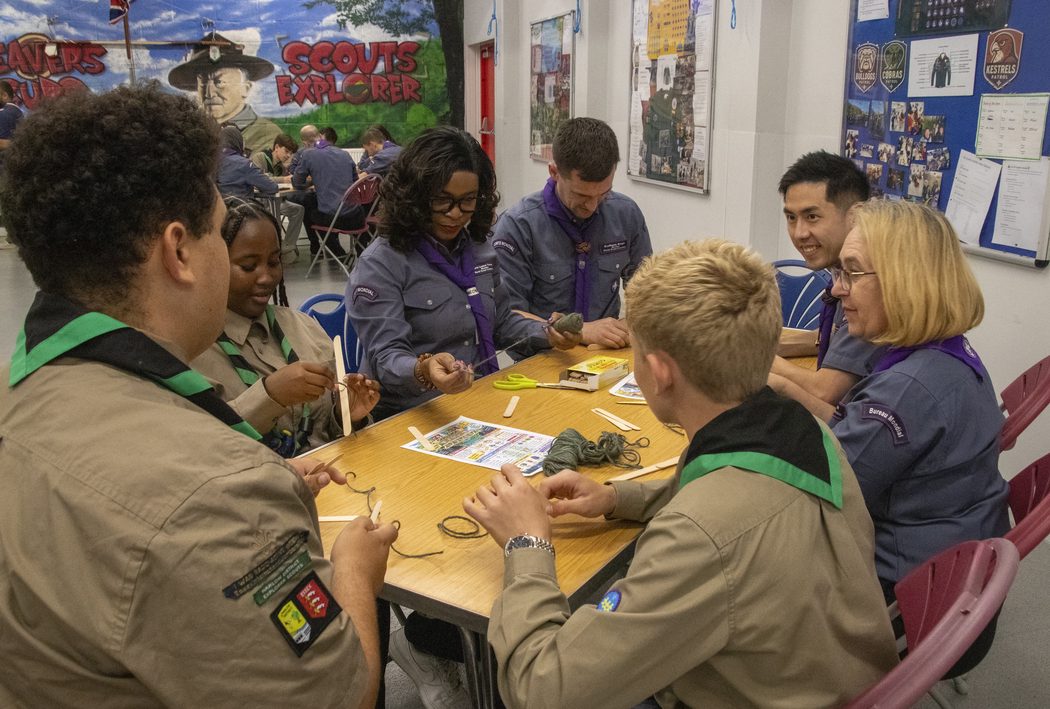
Committee members also met and joined local activities with UK Cubs, Scouts, and Explorers, exchanged with The Scouts UK leadership over an informal dinner, and visited the venue for the 44th World Scout Conference with the UK Host Team.
The next in-person WSC meeting will take place from 18 to 21 March 2027 in Gdańsk, Poland, giving the Committee an opportunity to meet with the Host for the 26th World Scout Jamboree and review final on-the-ground preparations for next year’s event.
On behalf of the entire WSC, we look forward to reconnecting with NSO leadership during the upcoming NSO Town Hall on 14 November. More details about the town hall programme and how to register will be shared soon.
Yours in Scouting,
Daniël Corsen
Chairperson
World Scout Committee