


Young people are doing more than just living with conflict. They are stepping up to support communities and build lasting peace. Last week, World Scouting took part in a high-level meeting in Brussels, Belgium, hosted by the European External Action Service, to highlight the important role Scouts play in helping others and strengthening resilience in conflict zones around the world.
The event brought together representatives from European institutions, youth, peace, and security practitioners, civil society organisations, and young leaders from countries affected by conflict. Together, they explored how youth movements are supporting humanitarian response, strengthening community resilience, and putting the UN’s Youth, Peace and Security agenda into action.
Opening the discussion, World Scouting’s Secretary General, David Berg, spoke about the often-overlooked role young people play in times of crisis. "When we talk about young people living through conflict, we often focus on what they have lost. But there is another side to the story, which is to recognise what young people do in times of crisis."
From Ukraine and Haiti to Lebanon, Scouts are helping communities respond to humanitarian challenges, supporting people displaced by conflict, strengthening social cohesion, and creating opportunities for young people to be part of recovery and rebuilding efforts.
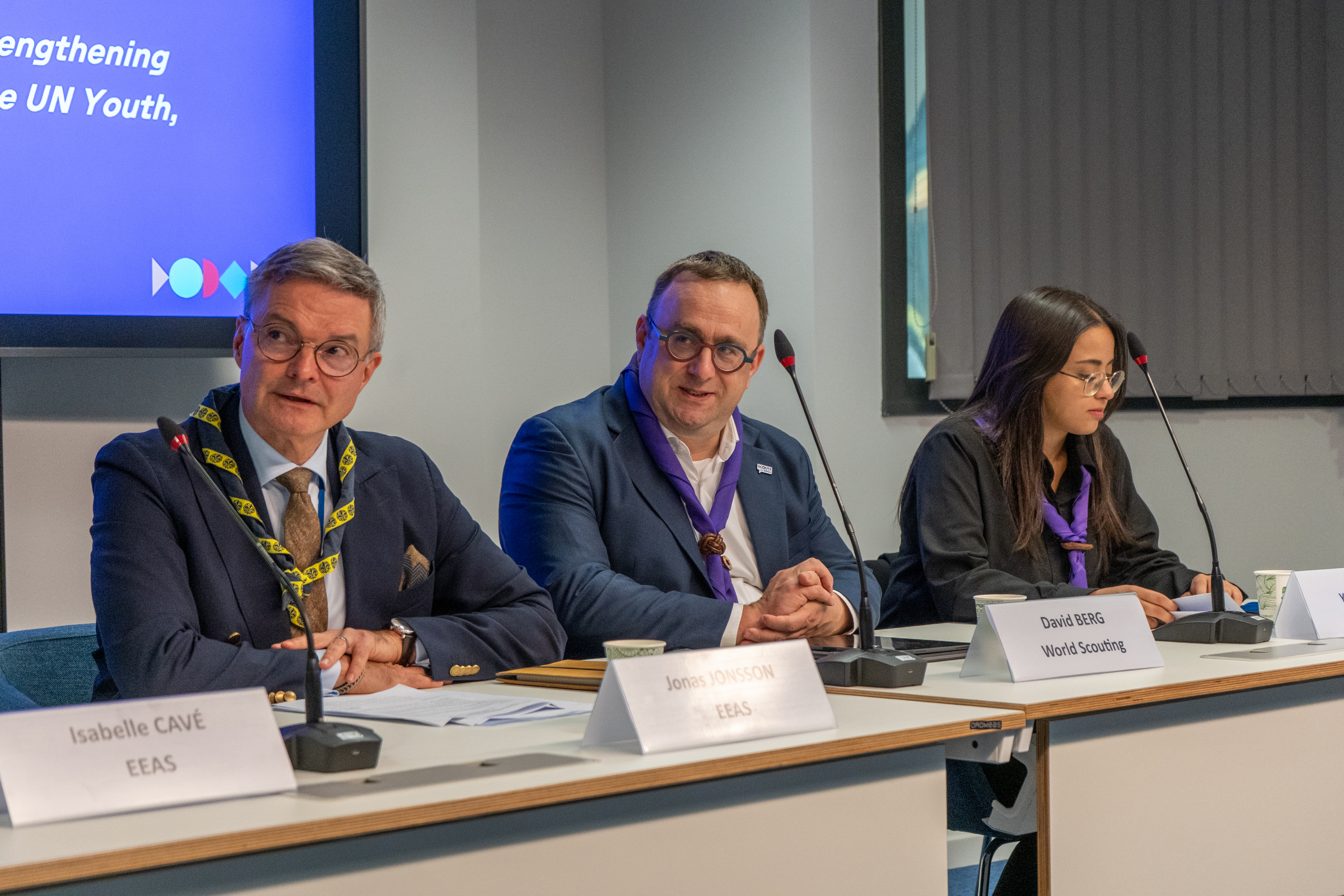
The event also shared the stories of young Scout leaders working in places affected by conflict.
Daria Bondar, a Scout leader from the Donetsk region in Ukraine, described how Scouting has helped young people to stay connected, find purpose, and feel a sense of belonging, even during war.
"Children still need to be children," Daria said. "They need to meet their friends, play, learn something new, laugh and have a place where they can feel comfortable. This is where I see the real value of Scouting, because resilience is not only about being strong and surviving difficult situations, it is also about having people around you, feeling that you belong somewhere and knowing that you can actually do something to help others.”
Yara Matar, a Scout leader from Lebanon and World Scouting Youth Representative, shared how Scouts have responded to many crises in her country, including economic hardship, displacement, and conflict.
"Lebanon has faced crisis after crisis, but throughout all of them, our Scouts never stood still," Yara said. "We adapted and asked: 'What can we do?' For over a decade, Scouting has taught me that we may not always be able to change the circumstances around us, but we can choose how we respond to them."
Matar shared how Scouts in Lebanon worked together to provide food, support families displaced by conflict, and create opportunities for children and young people to reconnect with their communities during times of uncertainty.
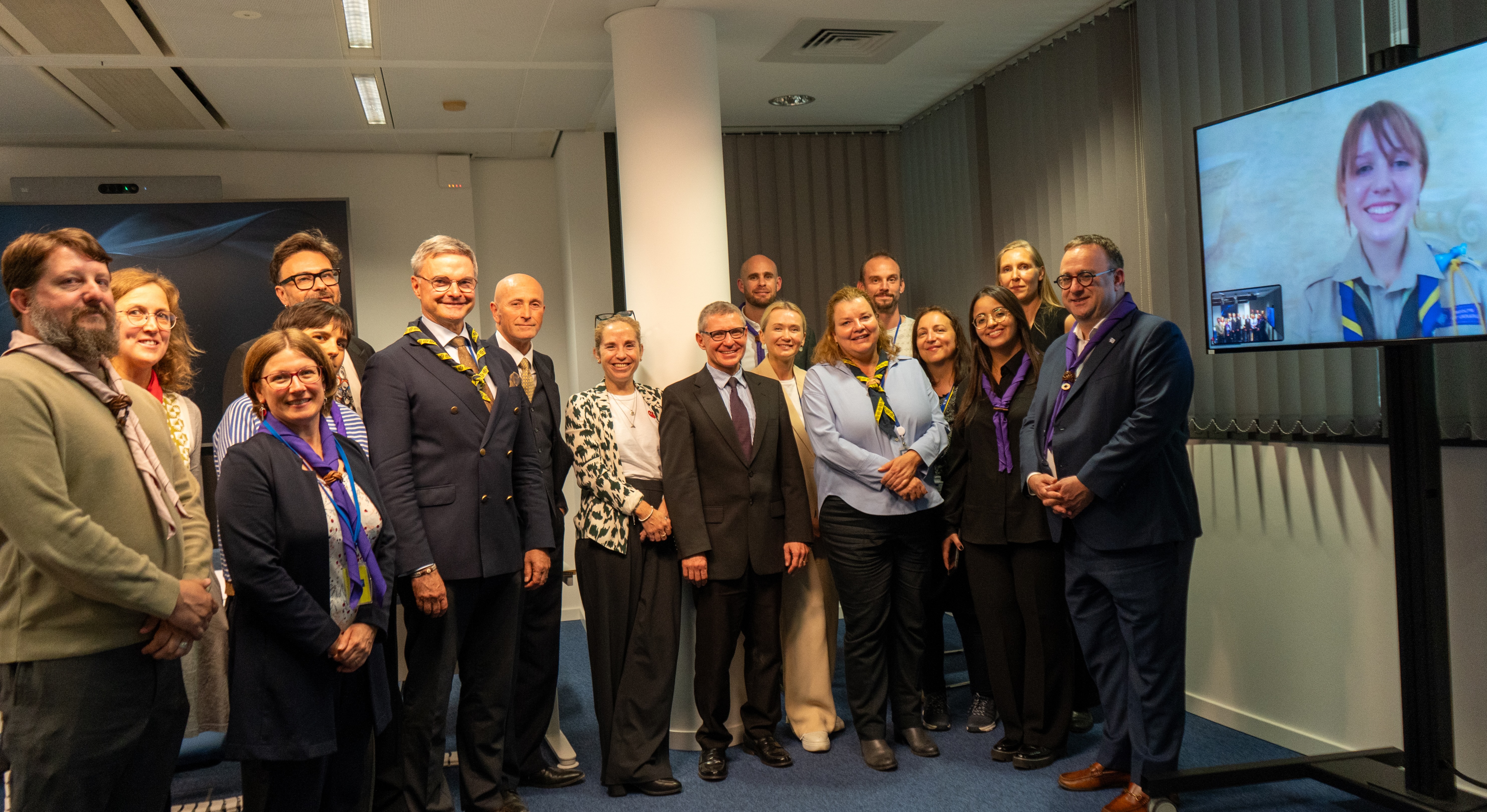
A key theme throughout the event was the power of non-formal education, like Scouting, in helping young people build skills for peacebuilding, conflict prevention, and emergency preparedness. Speakers said that young people should be seen as partners whose knowledge, experience, and leadership can help communities respond better to crises.
The event also highlighted World Scouting's recently published position paper on youth, peace and security. The paper recognises the vital role of young people in preventing conflict, building peace, and helping communities recover, and calls for greater youth participation in decision-making and peace processes.
To close the session, David called for stronger partnerships between institutions and youth movements to translate global commitments into local action.
“Through the Big Six Youth Organizations and the Global Youth Mobilization, the European Commission has made an important investment through the Youth Action Plan in the Youth Empowerment Fund. That investment is helping put resources directly behind young people and their ideas - enabling them to come together, take action in their communities and contribute to a more peaceful and inclusive world.”