

For nearly 120 years, Scouts have been ready to support their communities - especially in times of crisis.
Building on this long-standing commitment to both service and emergency response, Scouts from across Slovenia took part in national-level training on disaster risk mitigation and emergency preparedness near Ljubljana during 1-3 August 2025. Over three days, participants aged 14 to 24 gained knowledge and skills in protection and rescue situations, strengthening their ability to respond to real-world challenges with confidence, skill, and purpose.
The training combined classroom instructions and technical knowledge with practical learning. Participants were immersed in realistic emergency scenarios designed to reflect the kinds of challenges communities may face in real life. The 55 Scouts were divided into age-related groups where they explored topics, including how to provide assistance, manage temporary shelters, and respond effectively under pressure.
Participants also developed plans for follow-up activities that could be implemented in their local communities. A WOSM Consultant supported the programme, ensuring that the organising team received clear guidance around the activities and expectations.
This hands-on method proved especially effective. Young leaders were able to connect theory with practice, learn from one another, and build confidence in their own ability to act during emergencies.
The training was supported through funding available via World Scouting Grants and a global project designed to strengthen mitigation and preparedness capacities of NSOs on humanitarian action through education. It aimed not only to share knowledge, but also empower young people to take action — locally and responsibly — using approaches that could be tailored to different contexts and needs.
Slovenia is one of five National Scout Organizations (NSOs) across all regions using this approach in humanitarian action education - together with Fédération des Scouts de la République Démocratique du Congo, Tanzania Scouts Association, The Jordanian Association for Boy Scouts and Girl Guides, and Asociación Scouts de Colombia.
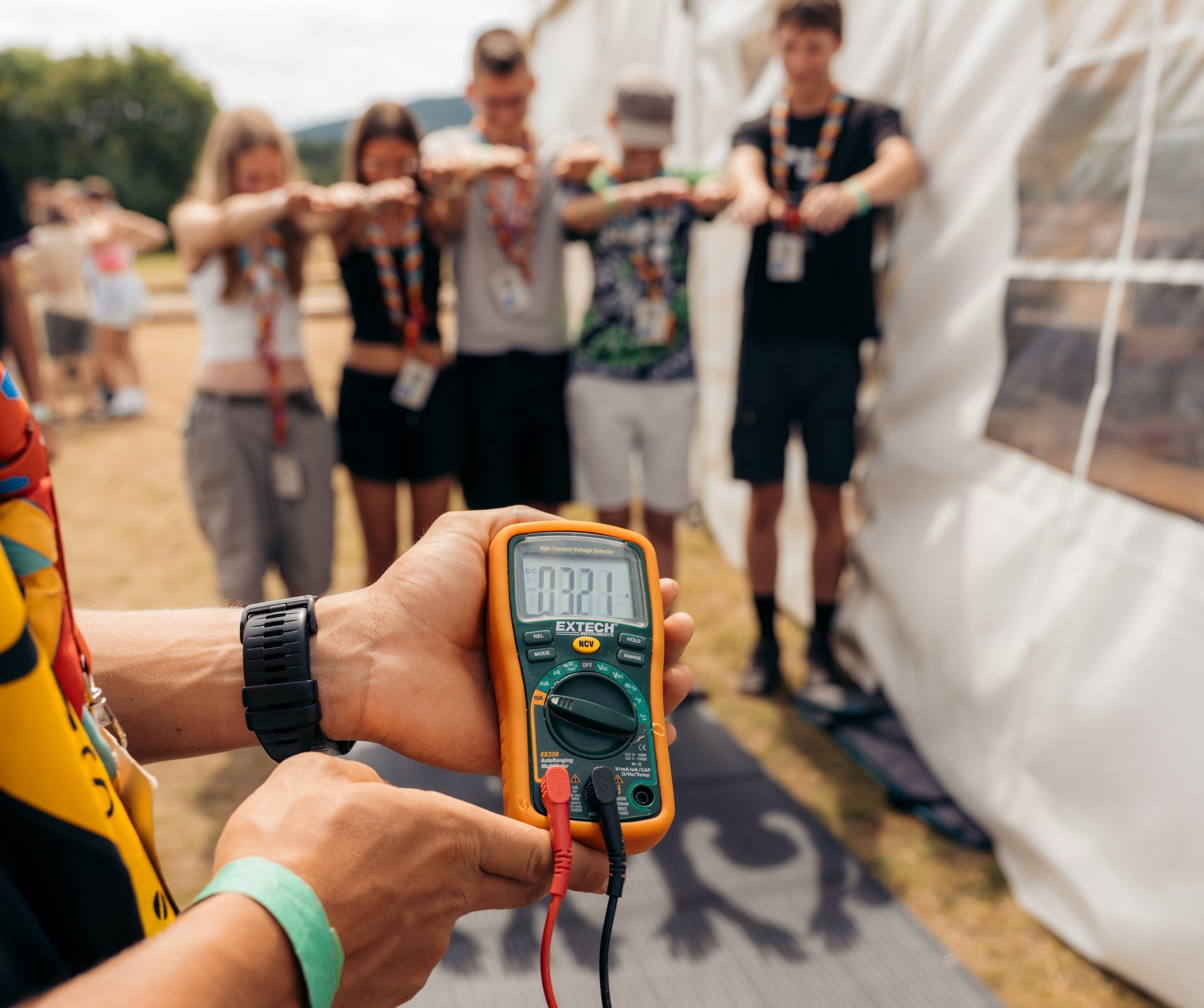
The training's positive impact is already visible. To date, 150 small-scale projects have been implemented across Slovenia that respond to specific community needs, such as emergency sheltering, psychological first aid, and volunteer management during crises. These projects have helped to cement and build on the learning and skills that participants gained during the training.
Reflecting on the global project, the training leader, Urban Spaić, said:
“I am very pleased that it has already started to engage young leaders. This experiential approach has proven to be both educational and highly motivating for the youth involved. This new thematic focus on disaster risk management requires additional guidance and adaptation, to facilitate its systematic integration into our programme delivery.”
As the project continues, it provides a strong example of how innovative educational approaches can equip young people with meaningful skills — preparing them not only to face crises, but to lead with confidence, empathy, and purpose in their communities.
Building on this, the NSOs use 2026 to continue scaling up and consolidating their activities. During this period, they will further adapt the programme to fit their national realities while maintaining core standards in humanitarian preparedness, risk mitigation, and youth leadership.
Looking ahead to 2027, the project will be sustained by the five NSOs and strategically positioned for systematic scale-up across Scouting with a Movement-wide capacity-building framework that ensures long-term and sustainable impact in humanitarian action.
Through this new approach, World Scouting is strengthening young people’s ability to respond to real-world challenges with confidence, skill, and purpose.