

As lifestyles, work commitments, and societal expectations evolve, traditional models of volunteering are being reimagined to better suit today’s realities. Across Europe, Scout organisations are finding innovative ways to make volunteering more accessible, flexible, and rewarding.
1. Micro-volunteering: Flexible digital tasks in Estonia
The Estonian Scout Association faced a common challenge: many young adults disengaged from Scouting after finishing high school due to time constraints and a lack of clear volunteer roles. To address this, they introduced Tööampsud (Work Bites), a digital platform offering micro-volunteering opportunities.
Through this platform, volunteers can choose small yet impactful tasks that can be completed remotely, such as translating webpages, designing promotional materials, or developing resources. To encourage participation, a built-in reward system recognises contributions based on completed tasks. This innovative approach has successfully reconnected former Scouts with the movement, strengthened administrative and creative support, and provided a scalable model for other organisations to follow.

2. Shared leadership: Expanding volunteer teams in Italy
In the Arezzo District of CNGEI (Italy), demand for Scouting was rising, but the number of available volunteers had not kept pace. Many young adults moved away for university, and parents and former Scouts hesitated to commit due to time constraints. To tackle this issue, the district introduced an expanded leadership model.
Instead of small teams of 3-4 people carrying full responsibility, leadership teams were expanded to 6-7 members. This allowed volunteers to contribute based on their availability, typically committing to just one or two weekends per month instead of every week. Leaders were still required to attend planning meetings, but their participation in activities was scheduled flexibly. As a result, more young people could join Scouting, and more volunteers—including returning university students and parents—became actively involved.
3. Team-based volunteering: Rethinking roles in the UK
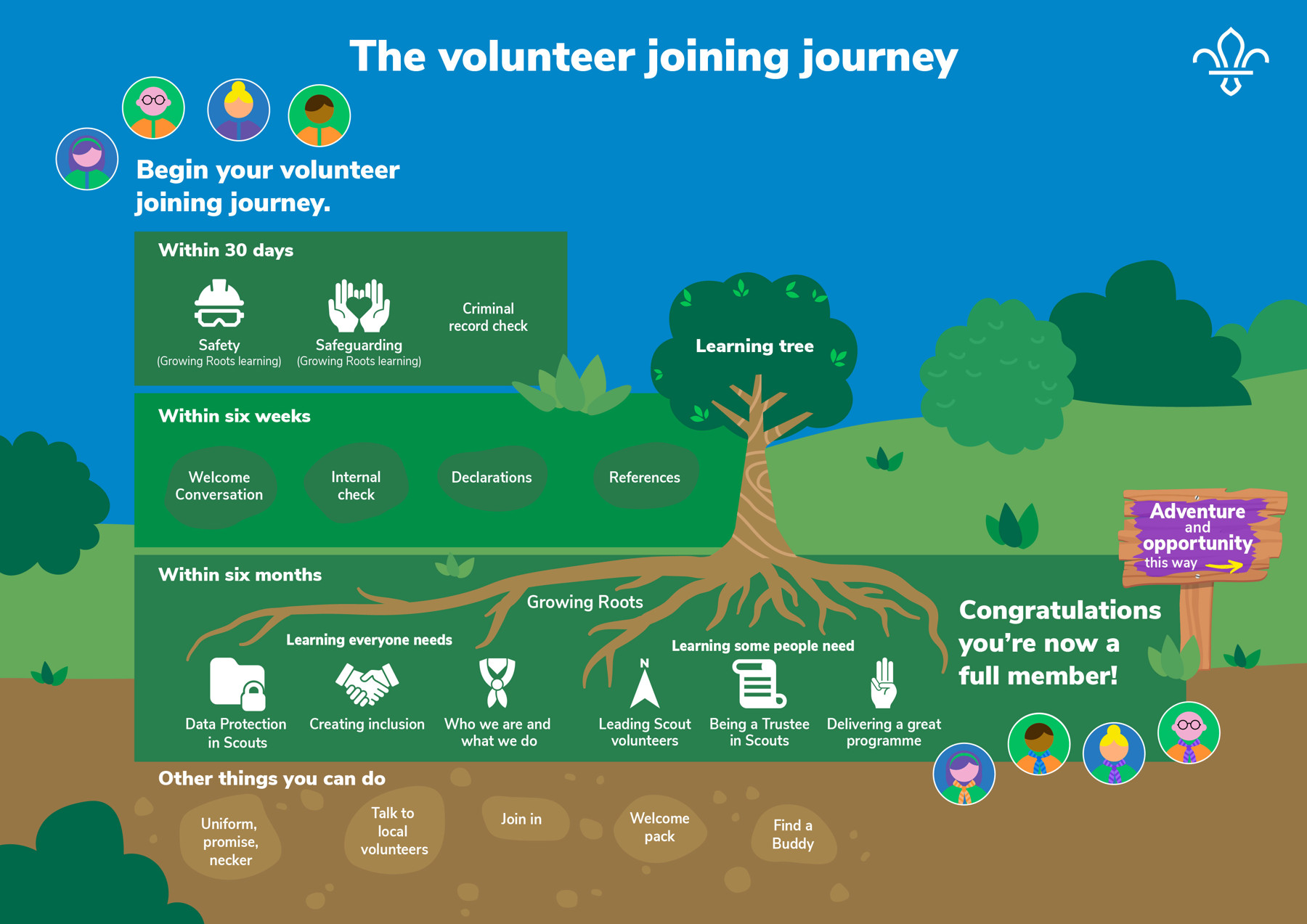
The UK Scouts identified a key challenge in 2017: traditional volunteer models often required significant time commitments, making it difficult to attract and retain volunteers. Their solution was a team-based volunteering system that moved away from rigid hierarchical structures.
Instead of placing the full burden on single individuals, responsibilities were distributed among team members. Volunteers could contribute according to their availability, reducing pressure and making roles more manageable. A digital system was also introduced to streamline communication and training, improving role clarity, increasing volunteer recruitment and retention, and fostering greater diversity in volunteer engagement. This shift from hierarchical leadership to shared team-based leadership has made volunteering more accessible and sustainable.
Every community has unique challenges, and there is no one-size-fits-all solution. However, three key lessons have emerged from these innovations:
- Technology enhances volunteering. Digital tools streamline training, communication, and task management, making it easier for volunteers to engage on their own terms.
- Flexibility is essential. Volunteers are more likely to commit when they can choose their level, type, and duration of involvement.
- Adapting to change ensures growth. By continuously evolving, Scouting can become more inclusive, adaptable, and capable of reaching more young people and volunteers than ever before.
Attracting and retaining volunteers is crucial to ensuring that more young people benefit from the Scouting experience. By embracing innovation and flexibility, Scouting can continue to thrive as a movement for the future.
The European Scout Region has set up an international team of volunteers to research and engage Member Organizations in new, flexible ways of volunteering to become more attractive, inclusive and diverse.