


Written by David Berg, Secretary General, World Scouting
Three weeks ago, World Scouting hosted the first WOSM Events Academy in Doha, Qatar, from 25 February to 1 March, bringing together 40 volunteers from across the Scout Movement, including future event hosts, national Scouting leadership, and World Scout Bureau staff alongside leading international experts involved in the planning and delivery of global events.
The Academy programme, designed to strengthen the quality and safety of future World Scouting’s events, quickly became an unexpected test of crisis management when on 28 February, military conflict broke out over Iran, and quickly escalated to neighbouring countries. The response required us as an organisation to act quickly, putting our learnings about past crisis scenarios and events into action.
Our first priority was the safety and well-being of the staff and volunteers participating in the Academy. Our approach was to rely on trusted information being provided by the Qatari National Scout Organization, local authorities, airlines, and embassies, and to keep in constant communication with the staff on the ground and in World Scout Bureau offices around the world, as well as with our Member Organizations and Board of Directors, the World Scout Committee.
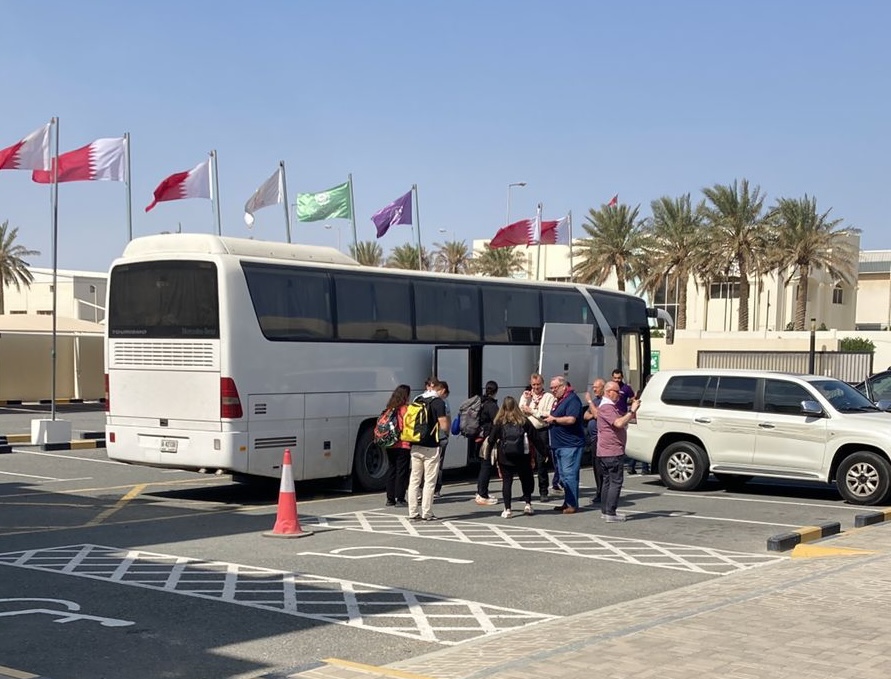
In the first hours of the crisis, authorities and embassies advised participants to remain in Doha and shelter in place. The Qatar Scouts and Guides Association generously provided food and accommodation, logistical support, and direct coordination with government authorities to ensure everyone’s safety. They also gave participants much-needed respite from the ongoing conflict with campfire meals, sporting activities, and Scouting games. Our deepest appreciation goes out as well to the Qatar Ministry of Education and Her Excellency Lolwah Al-Khater, the Minister of Education, for the generous support that went above and beyond what could be expected.
When it became clear that airspace would remain closed for several days or more, we began preparations to evacuate the group by land to Riyadh with the support of a professional security transport provider. We also mobilised our Scouting network in Saudi Arabia, drawing on support from embassies, government partners, and the Saudi National Scout Organizaton to arrange support systems and accommodation for the group on arrival.
A number of participants were not eligible for visa‑on‑arrival in Saudi Arabia, prompting World Scouting to initiative a diplomatic effort to coordinate closely with embassies, Ministries of Foreign Affairs, and partners across the United Nations system to help secure emergency visas. This outreach took place not only in Qatar and Saudi Arabia, but also in the participant’s home countries and with their NSOs to accelerate approvals as quickly as possible.
Deciding whether to move people across borders during an active conflict is never something we take lightly. It required careful assessment of risk, planning, and coordination, while always thinking about the safety of individuals impacted.
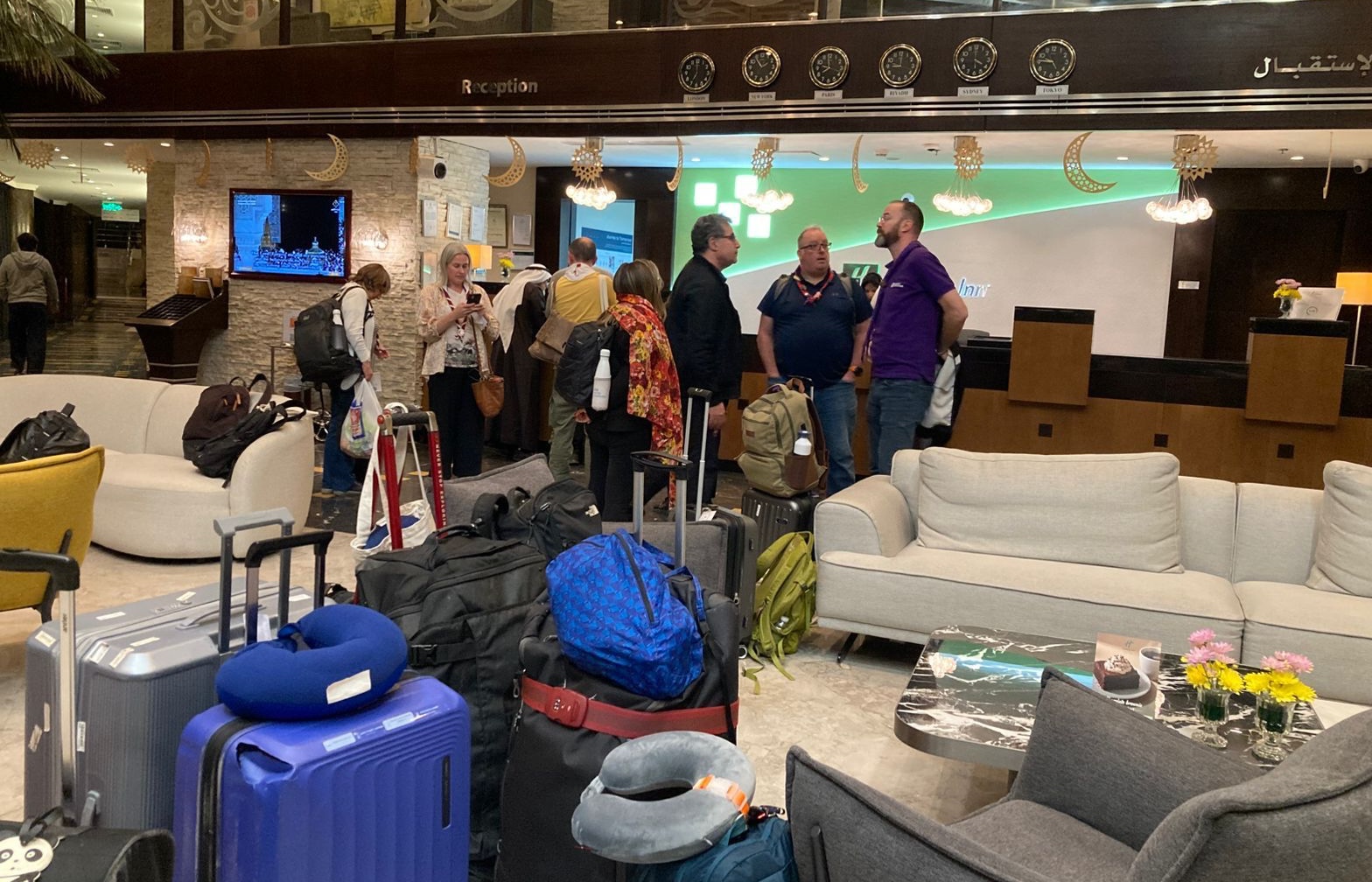
The first group made it safely to Riyadh and was greeted by Saudi Scouts for an Iftar dinner to break the daily fast during the holy month of Ramadan. Diplomatic efforts also continued to secure visas for the second group of participants who were eventually booked on relief flights within 48 hours to leave Qatar when limited relief flights became available. In the end, all participants returned home safely to friends, family and loved ones.
In responding to the situation, we drew on our experience from managing past events and crises. With a solid understanding of the risks involved, we mobilised teams across multiple offices to respond, communicate quickly and clearly, and prioritise both the safety and well-being of participants during and after the situation. We also reached out across our networks to access the expertise and professional insights we needed along the way.
The experience also reminded us that we are stronger when we work together to support one another - Qatari Scouts and their government went above and beyond to provide safe shelter, Saudi Scouts offered hospitality to our exhausted travelling group, UN and government partners helping to secure visas, and donors providing additional resources when we needed it most. These efforts were a true reflection of Scouting’s values in action.
While this chapter is over, much work remains. Organising international events in an increasingly complex and unpredictable world requires us to strengthen our crisis management systems, improve contingency planning, enhance capacity around crisis communications, and clarify decision-making processes. In doing so, we can ensure that as a global organisation, we are ready to respond and to be prepared for the unexpected when the next crisis happens.