


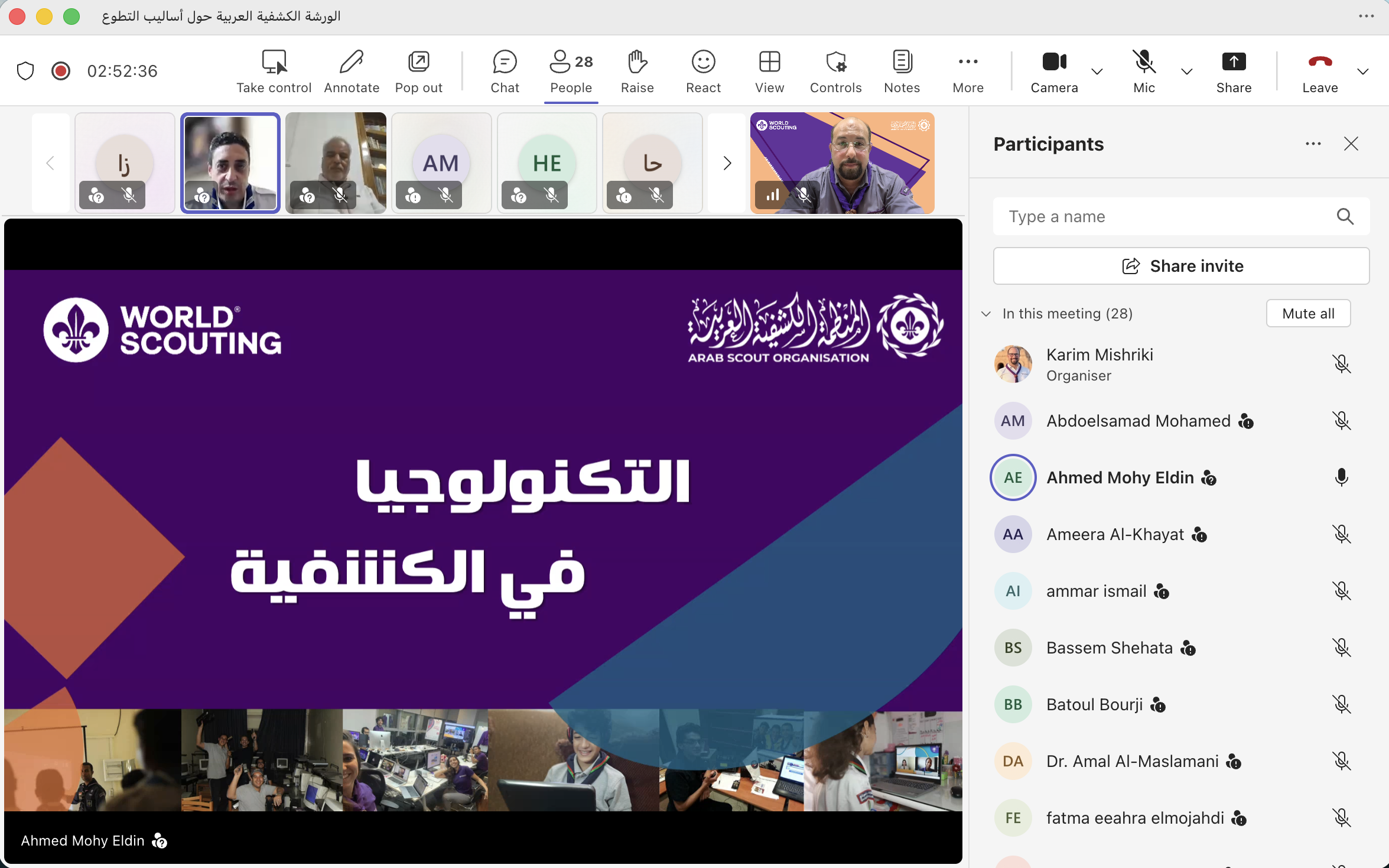
Marking the International Year of Volunteers, Scout leaders across the Arab Scout Region gathered to explore the future of volunteering. The World Organisation of the Scout Movement (WOSM) - Arab Support Centre organised an online regional training workshop on 16 and 17 July 2026 with the support of Adults in Scouting consultants. The workshop introduced agile methods to volunteer engagement, including micro-volunteering models tailored to the evolving lifestyles of Generation Z and Generation Alpha.
Volunteering is becoming increasingly difficult to suit the lifestyle of many young people, making it more challenging for organisations to recruit and retain volunteers. Flexible work, technological advancements and changing expectations are reshaping how younger generations choose to contribute to their community.
Purposefully addressing recruitment challenges across the organisation, the workshop explored a transition from traditional volunteering methods to modern ones reflecting the recognition needed by the younger generations.
Traditionally, volunteer projects relied on long-term commitments, fixed roles, and recognition through badges, certificates or awards. While these approaches remain valuable, they do not always provide the flexibility and the skill-based opportunities that many young people seek today.
In the course of two evenings, participants across the Arab region gathered to understand why volunteering methods are changing and how we can improve them to fit the current generations.
The workshop’s sessions centred around three key pillars in aim to help reshape the future of volunteer engagement across the Arab Scout Region. Participants were introduced to the realities of labour market pressures, the shift in lifestyles and motivations of the younger generations, and other barriers preventing young adults from incorporating volunteering in their daily life.
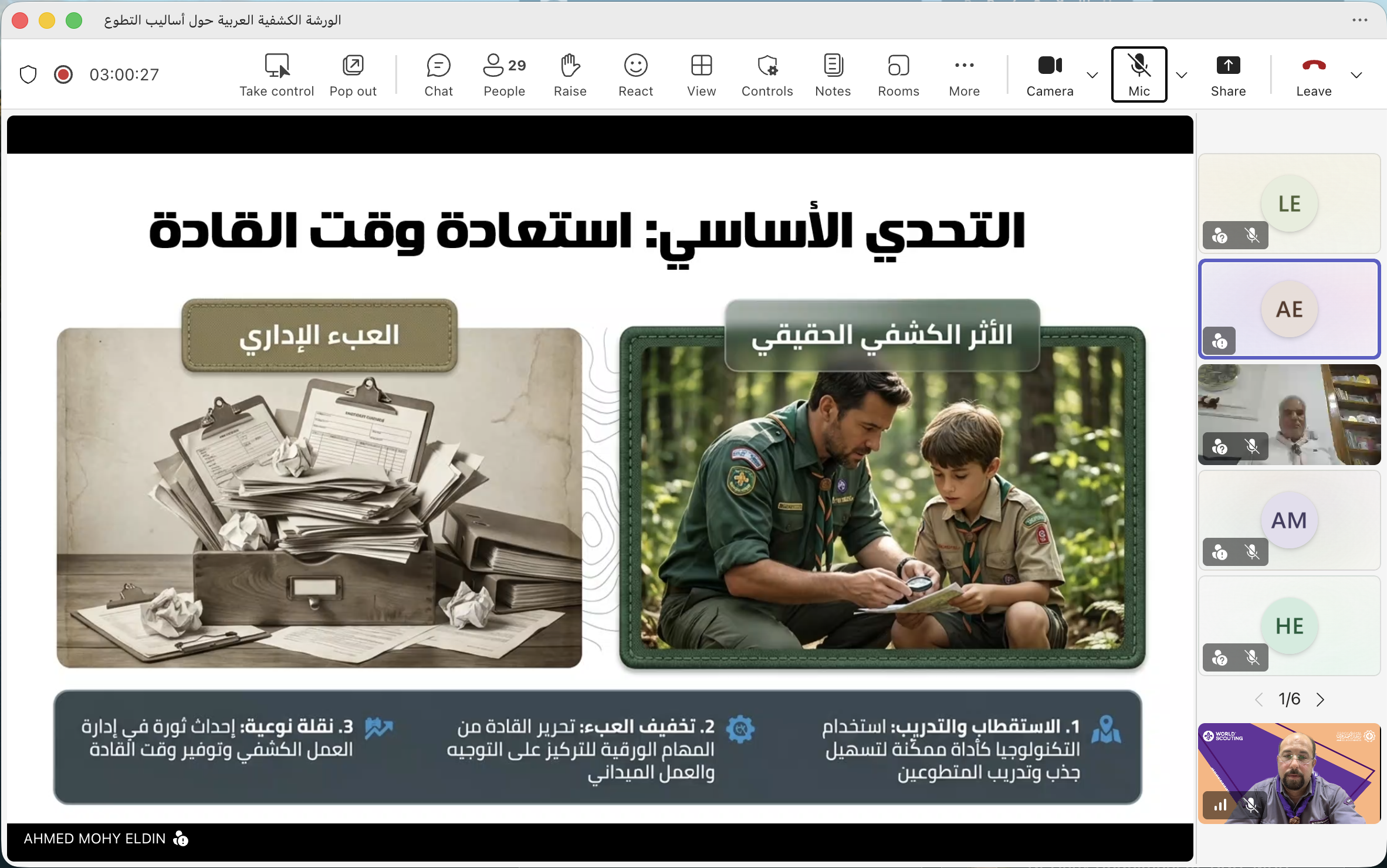
Acknowledging the possible obstacles faced by the young generations direct the focus of the workshop to finding practical solutions. This includes modern approaches of volunteer engagement that reflect the expectations of the younger generations of today. Young adults are seeking flexible volunteering models, involving skill-based volunteering that are episodic rather than long-term. This allows volunteers to contribute to their communities through short-term opportunities.
By the end of the workshop, participants had developed a strong understanding of how modern management of volunteering could benefit the Scout Organisation in recruiting and retaining volunteers. The sessions also encouraged National Scout Organisations (NSOs) to adopt flexibility in their future volunteer-based opportunities across the Arab Scout Region through the creation of a roadmap for growth.
As the expectations of young people evolve, so must the way organisations engage their volunteers. Through embracing more flexible, inclusive and skill-focused volunteering methods, the Arab Scout Region is taking an important step in maintaining meaningful and accessible opportunities for future generations in Scouting to develop, serve and lead.